
Robotic Machine Tending
Robotic machine tending helps shops keep CNC machines loaded, reduce idle time, and support repeat production with less manual handling. CWM helps evaluate machine tending applications based on the part, machine, cycle time, workholding, and production goal.
What is Robotic Machine Tending?

Robotic machine tending uses a robot or cobot to load raw parts into a machine, unload finished parts, and keep the production process moving with less operator involvement.
In CNC environments, machine tending is commonly used with vertical machining centers, turning centers, and repeat part runs where loading, unloading, or operator availability limits output.
The goal is not just to add a robot. The goal is to build a practical system around the machine, the part, and the way your shop actually runs.
Why Shops Automate Machine Tending
Increase Machine Utilization
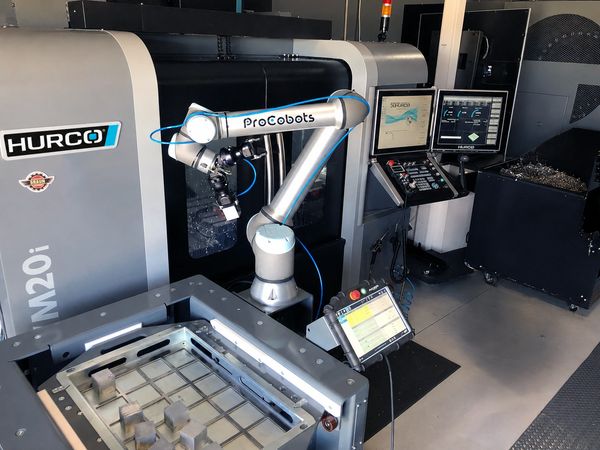
Keep machines cutting more consistently by reducing the time they sit idle waiting for manual loading, unloading, or operator attention.
Reduce Manual Loading
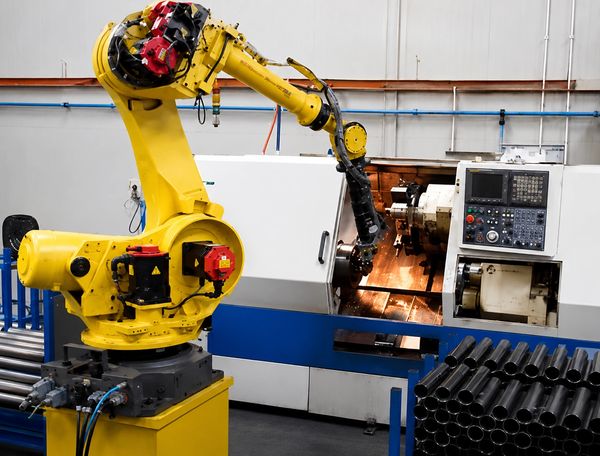
Shift repetitive part handling away from operators so they can focus on setup, inspection, programming, troubleshooting, and higher-value shop tasks.
Support Repeat Production
Support Repeat Production
Support Repeat Production

Improve consistency on repeat jobs where parts can be presented, loaded, and unloaded in a predictable way.
Extend Productive Hours
Support Repeat Production
Support Repeat Production
Support longer production windows, lights-out opportunities, or unattended run time when the part, process, and machine are a good fit.
Typical Machine Tending System

A successful machine tending setup includes more than the robot. The full system has to account for how parts are staged, how they are held, how the machine is accessed, and how finished parts are removed.
A typical machine tending system may include:
robot or cobot
machine interface
gripper or end-of-arm tooling
raw part staging
finished part staging
workholding or fixture strategy
safety guarding or area scanners
programming and operator workflow support
CWM helps customers think through these details before the project moves forward, so the automation supports production instead of adding unnecessary complexity.
Where Machine Tending Fits
CNC Milling
CNC Milling
CNC Milling
Robotic tending can help keep machining centers loaded during repeat milling operations, fixture-based work, and production jobs with predictable part handling.
CNC Turning
CNC Milling
CNC Milling
Turning centers may use robots, gantry loaders, or bar feeders to support repeat shaft work, bushings, hubs, fittings, and other turned components.
Repeat Part Runs
High Mix/ Low Volume Runs
High Mix/ Low Volume Runs
Machine tending is strongest when parts are consistent enough to be presented, gripped, loaded, machined, unloaded, and inspected in a repeatable way.
High Mix/ Low Volume Runs
High Mix/ Low Volume Runs
High Mix/ Low Volume Runs
Automation may still fit some high-mix environments, but the setup strategy, gripper selection, part presentation, and programming approach need to be reviewed carefully.
Planning Considerations Before Automating

Before adding a robot to a machine, the full process should be reviewed. Cycle time, part consistency, access to the machine, workholding, inspection needs, and operator workflow all affect whether machine tending will be practical.
Important questions include:
Can the part be presented consistently?
Can the robot access the machine safely?
Does the cycle time justify automation?
Will workholding need to change?
How will finished parts be staged or inspected?
Can the machine communicate properly with the robot?
Does the shop have floor space for the cell?
Who will support the system after installation?
The best machine tending projects solve a real production constraint. They do not add automation just because a robot looks good next to a machine.